How PPPoker Works: Clubs, Unions, Agents and Rake
PPPoker AI Software runs next to an app that does not work like a classic poker site: there is no central lobby, no cashier and no real-money account inside PPPoker. Games run in private clubs, clubs pool their tables in unions, and agents move chips in and out for money. This guide explains the pieces, how money and rake flow between them, and why that structure matters before you install the assistant on Android or LDPlayer.
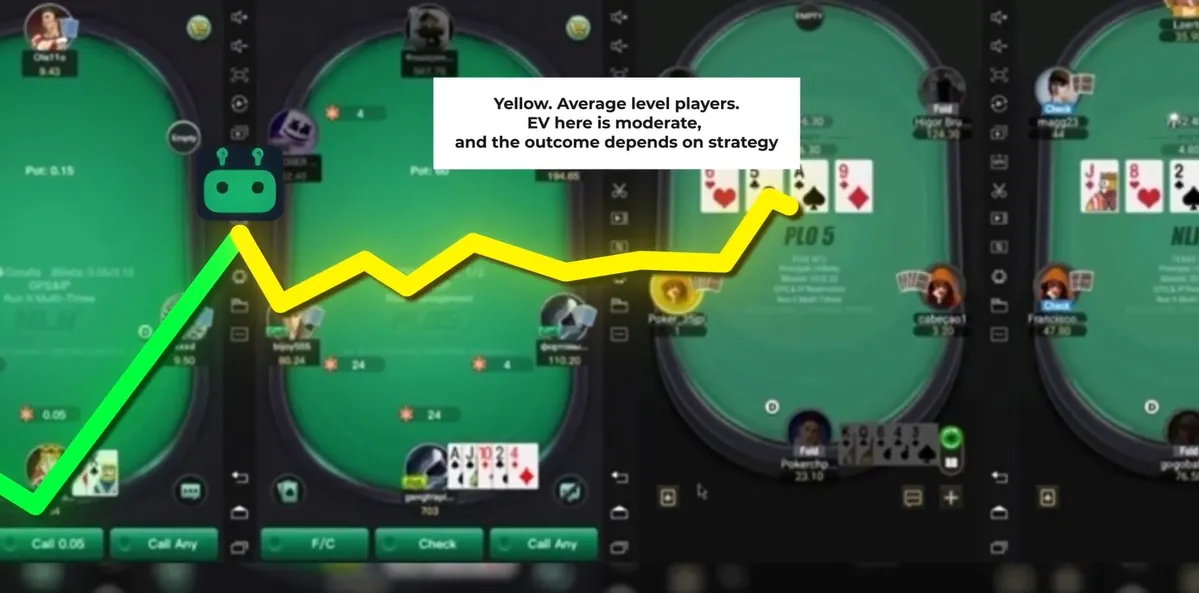
PPPoker and PPPoker AI Software in one paragraph
PPPoker AI Software runs next to a club-based poker app: PPPoker launched in 2016 under AceKing Tech Limited and has 1M+ downloads on Google Play. Players join private clubs by ID, clubs form unions to share tables, and agents exchange club chips for money outside the app, which sells no real-money play itself. Rake is set by the club and returned partly as rakeback.
The PPPoker app: facts as of 2026
PPPoker launched in 2016 and is published by AceKing Tech Limited. Official clients exist for Android, iOS and Windows, and the game arrived on Steam on 17 June 2026. The Google Play listing shows 1M+ downloads, a 4.3-star rating, a PEGI 18 age rating, and an update dated 10 July 2026.
The listing describes the app as offering no real-money gambling and being for adults only. That description is accurate about the app: PPPoker sells no chips for money. Any real value in club games comes from the clubs and agents around the app, which is the subject of the rest of this guide. The listing also notes that a single device can show up to three tables at once, which sets the ceiling for volume on one phone.
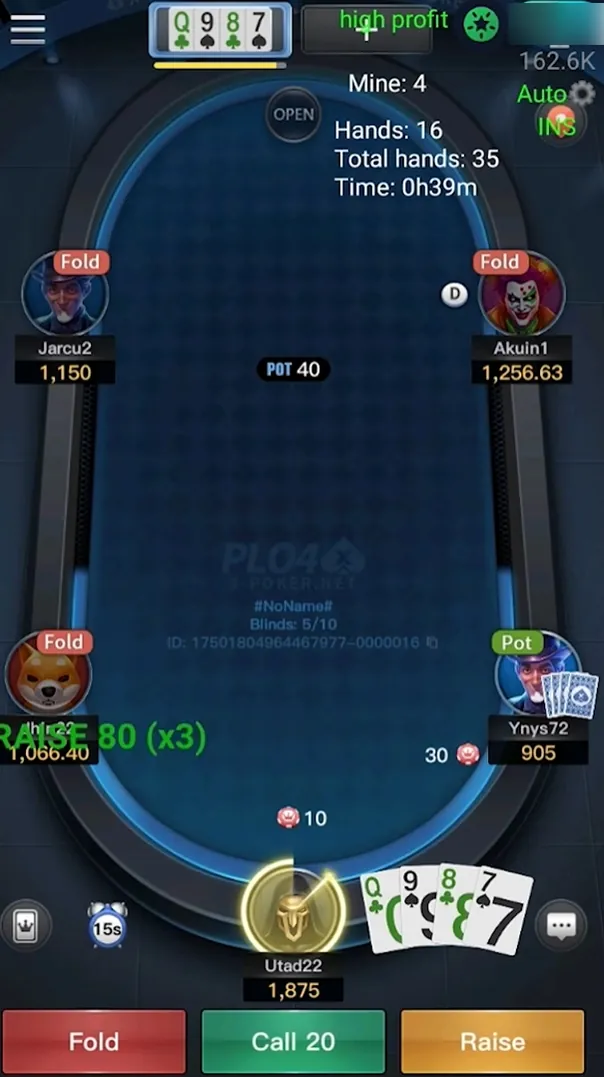
The screenshot shows a typical PLO4 seat view: hole cards, a stack in club chips, and the counters an assistant such as the assistant adds on top.
Clubs: the private rooms inside PPPoker
A club is a private room. Anyone can create one, give it a name and an ID, and invite players; joining a club means entering its ID and waiting for the owner to approve. Inside the club the owner decides everything: which games run, at what stakes, with what rake, who may sit and who is removed.
Because the owner is also the person who profits from rake, clubs have every incentive to keep tables full and players happy. That is why a well-run club feels like a home game with dozens of regulars, and why a badly run one empties out within weeks. For a player, the owner's reputation is the first thing to check; for anyone using software such as the assistant, the owner is also the person who decides whether an account stays.
Club IDs travel by word of mouth, forum threads and agent chats, and a club usually asks a new member which agent brought them before approving; that link between player, agent and club is the whole trust model of the app.
Unions: how clubs share tables
A single club rarely has enough players to keep games running around the clock, so clubs join unions. A union pools the tables of its member clubs: a player from one club sits with players from the others, and the union's rules on rake, formats and conduct apply across all of them.
Unions are where the volume is. Large unions keep tables open at every hour, run tournaments and promotions, and set the rake structure that member clubs pass on to their players. They are also where stats matter most for the assistant: opponents met in one club reappear across the union, and a profile built at one table is still valid at the next.
Unions also run the promotions that fill tables at odd hours, from leaderboards to rake races, and they decide which formats appear in the lobby; a PLO5-heavy union and an NLH-cash union feel like two different apps.
Agents and chips: how money moves
Club chips are the currency at PPPoker tables, and the app does not sell them. An agent works for a club or union and handles the exchange: you send money to the agent by an agreed method, often USDT or a local payment service, and the agent credits chips to your account; to cash out, you return chips and the agent pays you.
Because PPPoker is not part of that transaction, the safety of your money depends entirely on the agent and the club behind him. There is no operator to complain to and no licence that covers the deal. The practical rules follow from that: work only with agents that other players vouch for, prefer clubs with a long record, and keep only what you need for the next few sessions on the account. Fuel for the assistant is a separate balance paid to the software vendor, never to the agent, and a club dispute does not touch it.
Rake and rakeback in PPPoker clubs
Clubs take rake from each pot, and unions set the structure that member clubs use. Part of the rake often comes back to players as rakeback, negotiated with the agent or the club rather than published anywhere. Two clubs at the same stake can therefore differ sharply in what a session actually costs.
At low stakes, rake is usually a larger cost than any software. A hundred hands of NL $0.10/$0.20 with the assistant use 90 credits, which is $0.90; the rake on the same hundred hands depends on the club and can be several times that. Compare rake and rakeback before comparing bots, and treat a club that will not state its rake as a club to avoid.
Rakeback is negotiated, not listed, so ask the agent for the exact percentage before the first deposit and compare it with what other players in the same union report.
Games you can play, and which ones the assistant covers
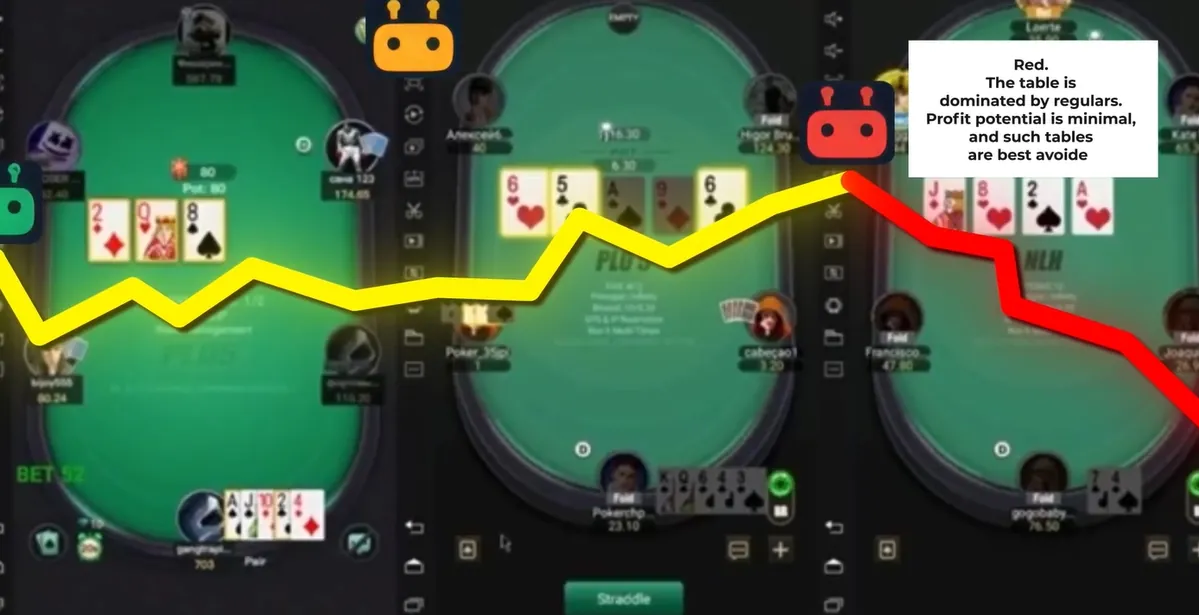
PPPoker runs No-Limit Hold'em, Pot-Limit Omaha with four, five and six cards, Short Deck, Open-Face Chinese, All-in or Fold, Sit & Go and multi-table tournaments. Which of these actually run depends on the club and the union; Asian unions lean toward PLO5 and Short Deck, others toward NLH cash.
A single device shows up to three tables at once. Players who want more use several devices or an Android emulator such as LDPlayer on a PC, where each instance behaves like a separate phone. The assistant supports every format above with its own models, including PLO5, PLO6 and OFC, and runs both on phones and inside LDPlayer; the download page lists the emulator settings.
Heads-up tables and Sit & Go formats appear in some unions as well, usually at fixed buy-ins set by the club; they are covered by the assistant like the cash formats.
Where third-party software fits in PPPoker
PPPoker offers no official HUD and no hand-history export, so players who want opponent stats turn to third-party tools: hand converters that feed a tracker, or assistants with their own database. The HUD guide explains both routes and which numbers matter.
Real-time assistance breaks the PPPoker terms, and clubs can remove players who use it and keep their chips. That applies to the assistant and to every alternative. If you are considering any of them, read how the anti-cheat rules are enforced first, then decide with the risk in view; the software costs fuel, the club balance is what you can lose.
The order of decisions is the same for every player: a club and an agent you trust first, a format you actually play second, and only then the question of software. The assistant costs fuel, which never expires; the club balance is the money you can lose, and it stays outside the software entirely.
Questions about PPPoker
Is PPPoker real money?
The app sells no real-money play. Clubs and their agents exchange chips for money outside the app, so real value comes from the club you join, not from PPPoker itself.
How do I deposit on PPPoker?
Through the club's agent. You send money by an agreed method, often USDT or a local payment service, and the agent credits club chips to your account.
What is a PPPoker union?
A group of clubs that share tables, so players from different clubs can sit together and the same rake structure applies across the union.
Is PPPoker safe?
The app is an established platform with 1M+ downloads. The risk sits with clubs and agents, who hold the money; use ones with a long record, keep small balances, and cash out regularly.
What is the table limit per device on PPPoker?
Up to three at once on one device, according to the app listing. More tables need more devices or emulator instances.
Does PPPoker AI Software need a club account?
Yes. The assistant reads the tables of the PPPoker account you already have in a club; it does not create accounts or handle chips.
Can I play PPPoker on a PC?
Yes, through the official Windows client or through Steam since 17 June 2026, or in an Android emulator such as LDPlayer if you want the Android build.
Bring The assistant to your club tables
Once you have a club and an agent you trust, the assistant installs in minutes on Android: enable PPPoker inside it and ask support on Telegram for free trial fuel to see the advice on your own tables.